Video models
Gemini Omni 1.2 Flash: 15-second AI video, 30% cheaper
Google's Gemini Omni 1.2 Flash makes clips up to 15 seconds, edits them turn by turn in conversation and costs $0.07 a second at 720p. It is now generally available on the Gemini API and Google Cloud.
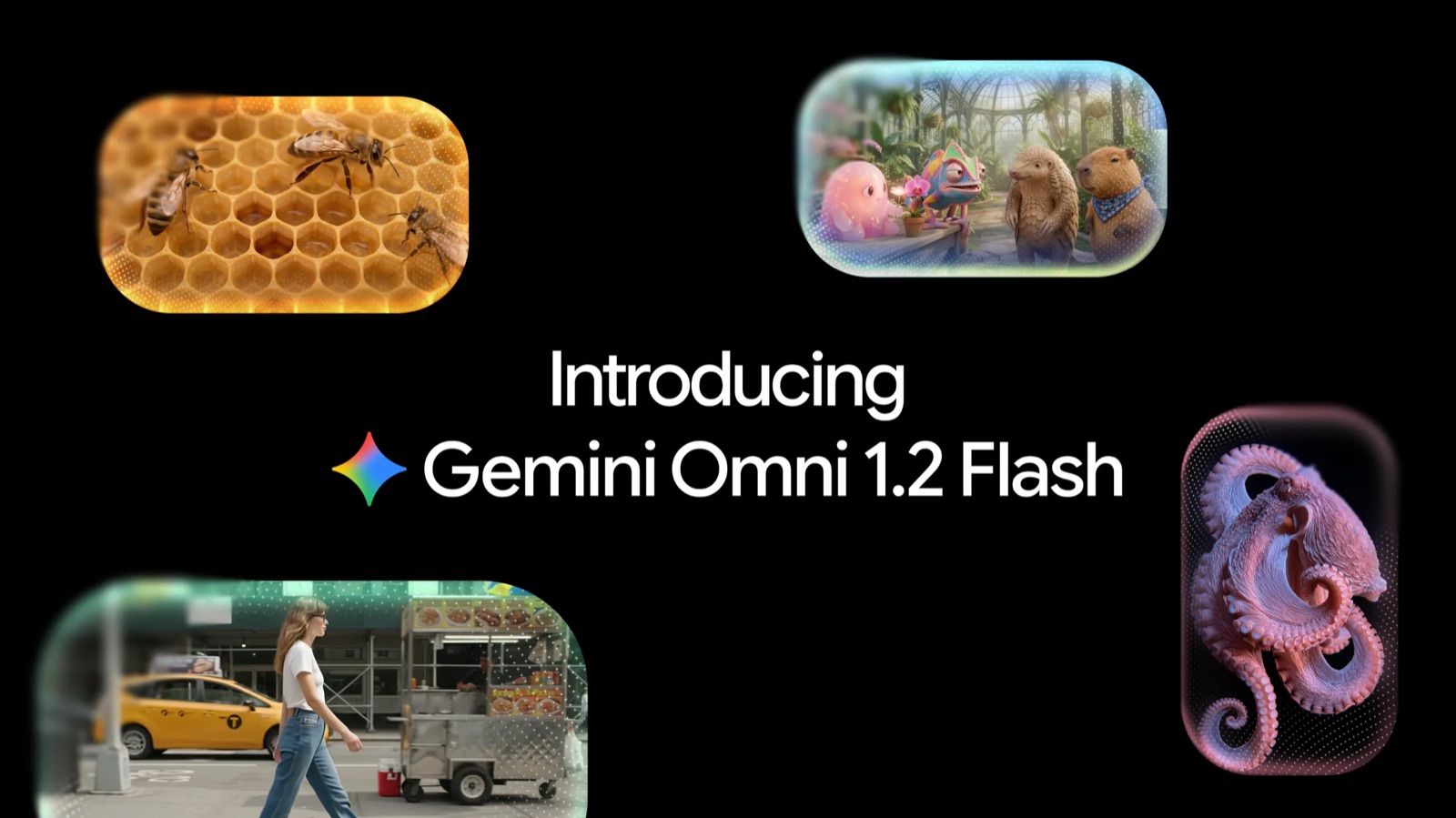
Google announced Gemini Omni 1.2 Flash on 5 November 2026 and made it generally available on the Gemini API and Google Cloud. The headline changes are longer clips, a lower price and better adherence to the references you give it.
What changed
- Length. Clips can now be generated and edited natively up to 15 seconds, up from 10 seconds with Omni 1.1. You choose the duration in one-second steps from 3 to 15.
- Price. $0.07 per second of 720p video, which Google says is 30% less than Gemini Omni 1.1, with similar savings at other resolutions.
- Drafts and upscaling. You can draft at 360p or 720p, then upscale the best results to 1080p or 4K.
- References. You can combine character, product or style images, short motion clips of up to three seconds, and audio cues. Google says faces, garments and typography stay consistent across camera angles.
- Editing in conversation. You refine the same clip turn by turn, for example swapping a background or changing the lighting, instead of regenerating it. This works across full 15-second clips.
- Speech and camera. Google reports more natural dialogue, clearer lip-sync, distinct multi-speaker conditioning and fewer unwanted jump cuts in long camera moves.
Access and limits
The model is available through the Gemini API, Google Vids and Gemini for business, and Google Cloud offers Provisioned Throughput for production use. Directing multi-character dialogue is also supported in Flow. Outputs carry an imperceptible SynthID watermark. Google Cloud notes that audio references are gated behind allowlisting.
Most of the examples are product and ad work: virtual try-on, catalogue spins, branded spots. Google’s consistency claims come from its own demos, and the posts do not publish a benchmark.
Our take
For interactive worlds, the useful part is not the extra five seconds. It is editing a clip by conversation and holding a character’s face and clothes steady from a reference. That is the same problem a story engine has when a character must look and sound like themselves in every scene. A lower price per second also makes drafting many variations realistic, which is how most creative teams will use it. We cover where this is heading in generative interactive film.