Video models
LTX API adds HDR, alpha mattes, reframing and 4K/8K upscaling
Lightricks has put four VFX tools from its open LTX video model on the LTX API: SDR to HDR, Alpha Gen mattes, Reframe and Upscale. They work on filmed footage as well as generated clips.
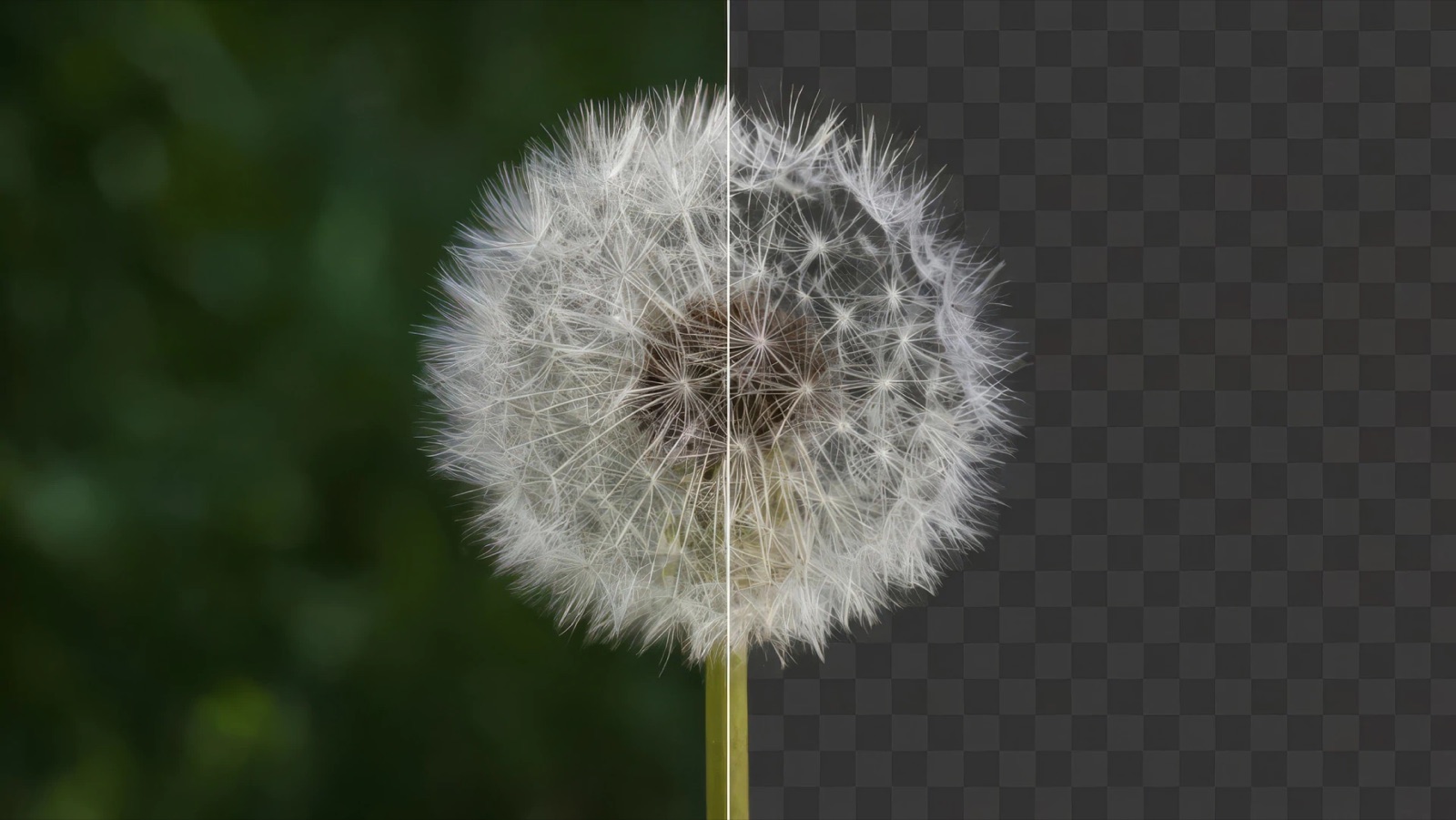
On 10 November Lightricks added four VFX capabilities to the LTX API. They were announced as open-model tools in late October; this release makes them available as hosted endpoints.
The pitch is footage that survives a real post-production pipeline: keyed, graded and delivered, rather than only generated and posted.
What is in the release
- SDR to HDR. Recovers dynamic range from standard footage and returns 16-bit scene-linear EXR in ACEScg, plus an HLG preview for review. LTX says it works with filmed footage and generated clips.
- Alpha Gen. Generates frame-matched alpha mattes at up to 4K, keeping fine detail such as hair and motion blur. The image above, from LTX’s own post, shows the idea: a dandelion beside its matte.
- Reframe. Adapts one shot to 1:1, 4:5, 5:4, 9:16 or 16:9 by generating content beyond the original frame, so one master can serve several platforms.
- Upscale. Raises footage to 4K or 8K, keeping the aspect ratio, audio and frame rate.
Where it fits
The LTX API already covers text-to-video, image-to-video, audio-to-video, retake and extend, with synchronised audio, up to 4K and 20 seconds per request. These new tools sit after generation: they take a clip, from any source, and make it usable in a compositing or grading tool. The underlying model is open, so teams that prefer to run it themselves can still do so.
LTX’s release note does not give per-tool prices or limits; they are on its API pricing page, which we have not checked here.
Our take
Generated video has been easy to make and awkward to use. A clip with no matte cannot be layered over a background, and a 16:9 render does not fit a vertical feed. Alpha, HDR and reframing are the unglamorous steps that decide whether a generated shot can enter a normal pipeline.
For anyone building interactive film or in-game cutscenes, the matte matters most. A character with a clean alpha channel can sit on top of an engine-rendered scene, which is how generated footage and real-time worlds end up in the same frame.