World models
Matrix-Game 4.0: the game engine keeps the truth, the AI paints the world
Skywork's open-source release runs a playable generated game at 60 frames per second on a single RTX 5090. The trick is not a bigger model: it is letting ordinary game code own the rules.
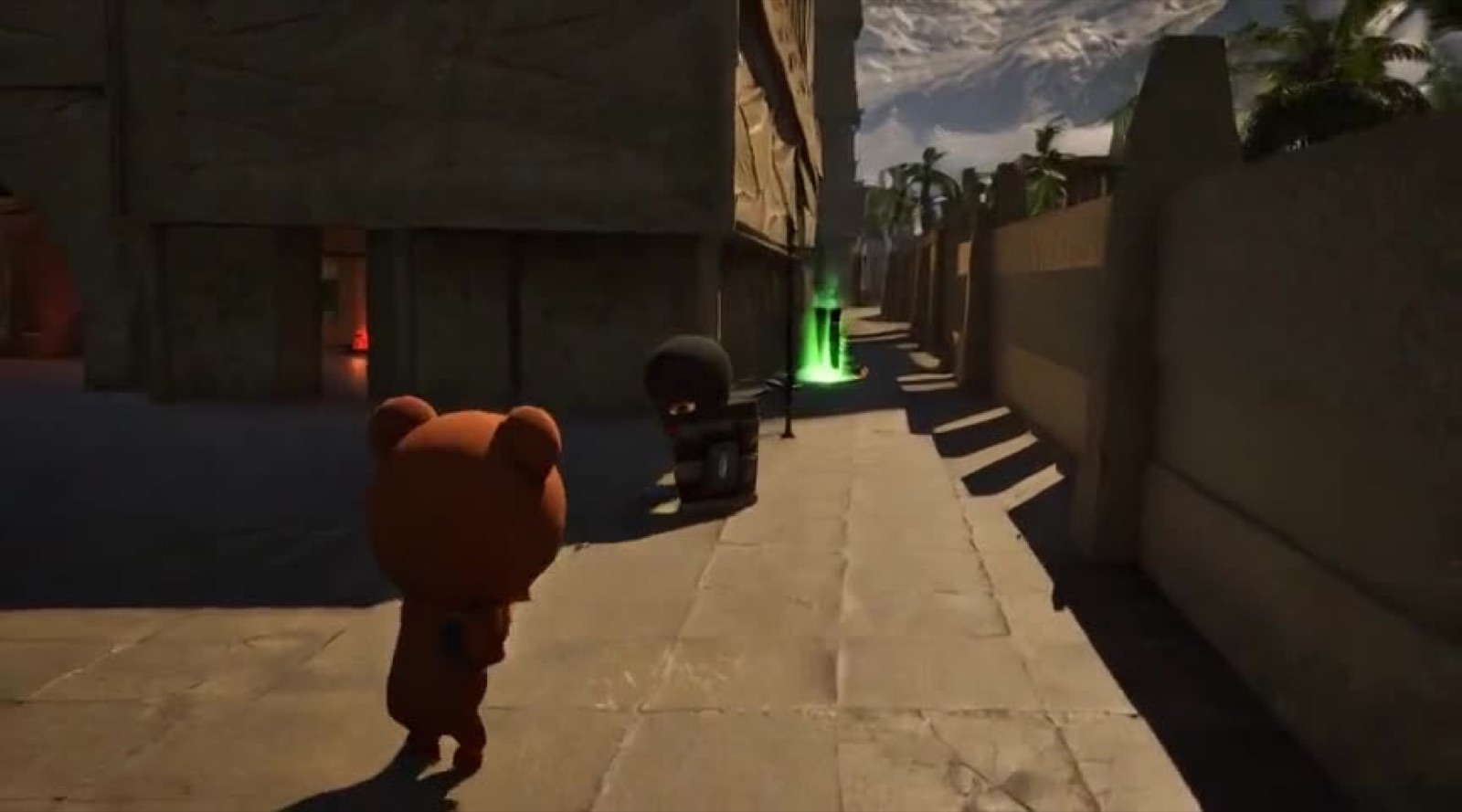
Skywork AI open-sourced Matrix-Game 4.0 on 15 October. It is the clearest demonstration yet that generated games can be fast, stable and run on hardware a player might own.
How it works
Earlier interactive world models asked one neural network to do everything: remember where things are, enforce the rules and draw every frame. Matrix-Game 4.0 splits the job, an approach Skywork calls a harness:
- A lightweight game engine (C++) owns the world state: positions, health, inventory, collisions, rules. It renders only a cheap low-poly proxy of the scene.
- A multimodal coding agent turns a player’s or designer’s idea into game code and scene descriptions. New gameplay means changing code, not retraining a model.
- A video model of about 5 billion parameters, built on Wan2.2-Fun-5B-Control and distilled to one or two denoising steps, repaints that proxy into finished frames with materials, lighting and atmosphere.
Because the engine owns the geometry, the world stays consistent. Walk past a tree, turn around, and it is still there, because it never stopped existing in code. The neural model only has to make it look good.
The numbers
Skywork reports 480p at 60 frames per second on one RTX 5090, with 112 ms from key press to screen and about 18 GiB of peak GPU memory. The repository’s own A100 measurements are lower, around 38 to 39 frames per second, so treat the headline as a best case. Code, a browser demo, game source and weights for three scenes (a medieval castle, ancient Egypt and city racing) are released under Apache-2.0. Training code and data are not.
Why it matters
This is the architecture we have argued for in AI models as game generators: something must keep the books, and something must perform the world. Matrix-Game 4.0 shows the split is not just more reliable, it is dramatically cheaper. Moving state out of the network cut latency from seconds to around a tenth of a second.
Our take
The engine is not going away. It is becoming the source of truth that generative rendering sits on top of. Studios that already think in terms of state, rules and canon are well placed; the visuals are about to become the easy part.