Video models
Pika H3 Flex: open-weights video and audio in six steps
Pika has released H3 Flex, a post-trained version of MiniMax H3 that makes up to 15 seconds of video with synchronised audio in six sampling steps and takes up to 12 reference files. The weights are on Hugging Face under the MiniMax H3 community licence.
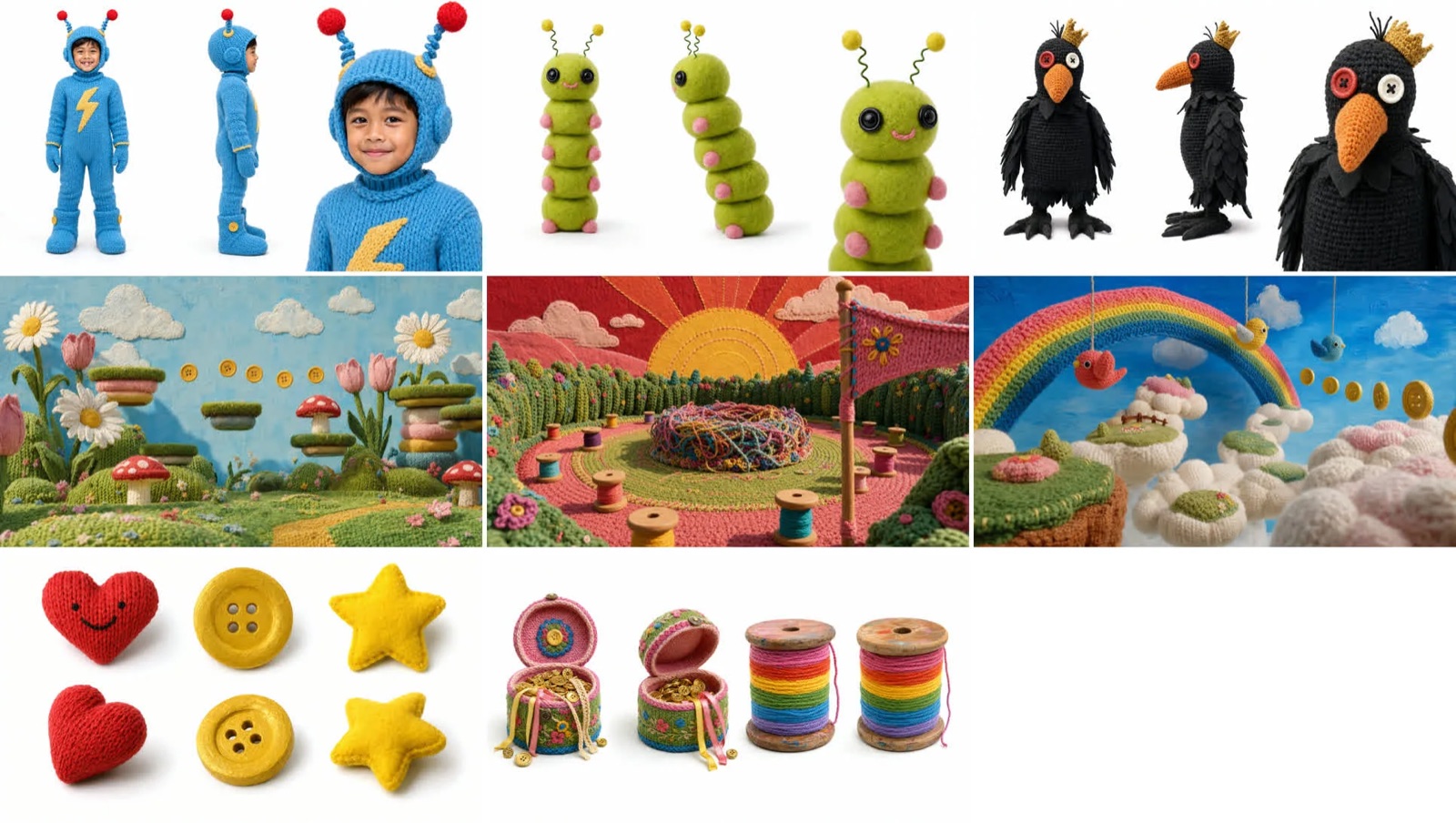
On 29 October, Pika announced Pika H3 Flex, its post-trained version of MiniMax H3. It generates video and synchronised stereo audio in six sampling steps instead of the 50 used by the original model, and Pika has released the weights openly.
What it does
H3 Flex produces clips of 5 to 15 seconds at 24 fps, with native output at 480p or 768p across 11 aspect ratios. The Hugging Face model card lists a 33-billion-parameter model. It handles text prompts, first and last frames, and multimodal references.
Pika says it can make a 15-second 768p clip with audio in as little as seven seconds of transformer computation. That is a controlled benchmark of the diffusion transformer only, not end-to-end latency, and Pika notes that references, upscaling and service overhead add time.
References and control
The main feature for creators is reference input. The announcement says H3 Flex accepts up to 12 reference files mixing images, video and audio. In the open-weights package that means up to nine images, three videos and three audio clips, with at least one image or video. You can supply a character from one image, a setting from another and movement from a video. Pika’s own example builds a short game-style sequence from a hero, a sidekick, a boss, levels and collectibles.
It also supports reference-guided editing, where you change an outfit, prop or setting while keeping the performance and timing.
Pika’s hosted extras
Through the Pika API, you can upscale a draft to 1080p, 2K or 4K, request five separate audio stems (dialogue, score, effects, foley and ambience) and use prompt enhancement. These are hosted services; the local package is limited to 480p and 768p with a mixed stereo track.
At launch, Pika reports that H3 Flex ranked first among open-weights models and seventh overall on the DesignArena text-to-video leaderboard. That is a snapshot from the company, so treat it as indicative.
Licence and limits
The adapters are Model Derivatives of MiniMax H3 and fall under the MiniMax H3 Community License, not a standard permissive licence. Check it before commercial use. Pika also says its showcase clips are creative examples, not benchmarks, and exact reproduction is not guaranteed. The package runs a request on one GPU, with hardware notes published in the repository.
Our take
Fast, controllable, reference-driven video is useful for cut-scenes, concept animatics and character tests, where the same cast and setting must survive across shots. The stems matter too: separate dialogue and score are far easier to fit into a game than a mixed track. For the larger picture of where this fits, see generative interactive film. Clips are still not worlds, though, and consistency over a whole game remains a job for authored data and state.