Image models
Pruna P-H3-Image: an open image model made from a video model
Pruna AI has open-sourced P-H3-Image, an image generation and editing model distilled from MiniMax H3. It is 7x smaller and 5x faster than H3, making a 4 MP image in 2.6 seconds on one B200.
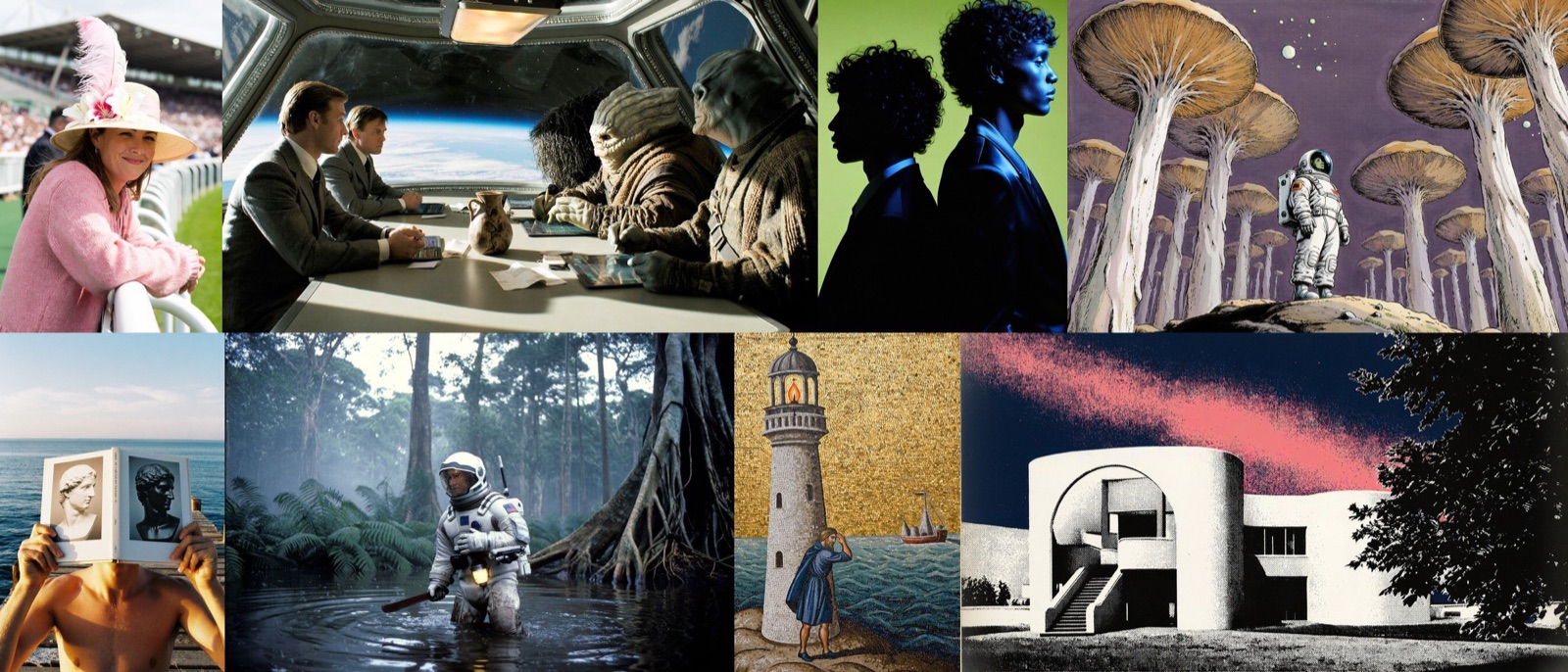
On 3 November, Pruna AI released P-H3-Image, an open-weights model for text-to-image generation and image editing. It is built on MiniMax’s open H3 video model, which Pruna chose as a starting point because a video model has to learn how objects look from different angles and how light falls on materials.
What it does
P-H3-Image renders images from 2 to 16 megapixels and edits with up to nine input images. Pruna says it is strongest at documentary and editorial photography, portraits with real skin texture, film stills, anime frames, drawings, prints and graphic design with short text.
Out of the box, H3 can make single images, but Pruna says they come out soft and blurry, and the model is too large and slow for most people. To fix that, it reworked each part of the pipeline:
- a small prompt upsampler based on Qwen3.5-9B, which turns a short request into a prompt H3 handles well;
- a text encoder cut from 32B to 4B parameters by distillation;
- a diffusion schedule retuned for fine detail, with sampling cut from 50 steps to 8;
- a backbone slimmed from 33B to 20B parameters;
- a decoder trained to turn one frame into one sharp image.
The numbers
Pruna reports that it is 7x smaller than H3 (20 GB instead of 143 GB in the smallest quantised version) and 5x faster, at 2.6 seconds instead of 12.4 for a 4 MP image on one B200. It needs about 21 GB of VRAM for 8 MP images. Pruna says the 8-step model matches the 50-step original for most prompts. These are the company’s own measurements.
Access and licence
The weights are on Hugging Face, with a ComfyUI package and a playground on Hugging Face Spaces. It uses the MiniMax H3 Community License, which is not a standard permissive licence. Pruna notes that it excludes the European Union, the United Kingdom, the Republic of Korea and the United States unless you hold a separate licence from MiniMax, and that products built on it must show “Powered by MiniMax H3”. Read it before any commercial use.
Limits
Pruna lists its own caveats. Very short, overly long or hype-heavy prompts can weaken results. Hands, small background figures and fine details may be distorted, especially below 8 MP. Small or dense text is unreliable, though short quoted text works well.
Our take
For game teams, the interesting part is reference editing: a model that holds a character or a setting across several input images is useful for concept art and consistent asset sheets. The licence region limits matter here, including for studios in the UK. The wider lesson is that video models are becoming a base for other tools, an idea we explore in generative interactive film.