Authorship
Who writes the story? Authorship in AI interactive storytelling
When a model performs a story live and every player gets a different version, who is the author? We think the answer is still the writer, and that this shapes how AI stories should be built.
A novel has one author and one text. Every reader meets the same sentences in the same order. A game breaks that a little: the player chooses the route, but every route was written in advance. AI interactive storytelling breaks it completely. The scene you play tonight has never existed before and will never exist again, because a model is generating it in response to you.
That raises a question writers, studios and players are all starting to ask. If the words are generated, who wrote the story?
Three answers, and why two of them fail
The first answer is the model. It produced the sentences, so it is the author. This is the answer that makes writers nervous, and it is also the least useful. A model with nothing to work from produces stories that are fluent and forgettable: competent plots assembled from the average of everything it has read. A story is not just text. It is a set of choices about what matters, and a model left to itself makes the safest choices available.
The second answer is the player. They steered every scene, so the story is theirs. There is some truth here, and it is why interactive fiction is so compelling. But players rarely want to do the whole job. Most of us do not want a blank page and an obliging machine; we want to walk into a world someone else imagined and find it full of surprises. Hand the player all of the authorship and you hand them all of the work.
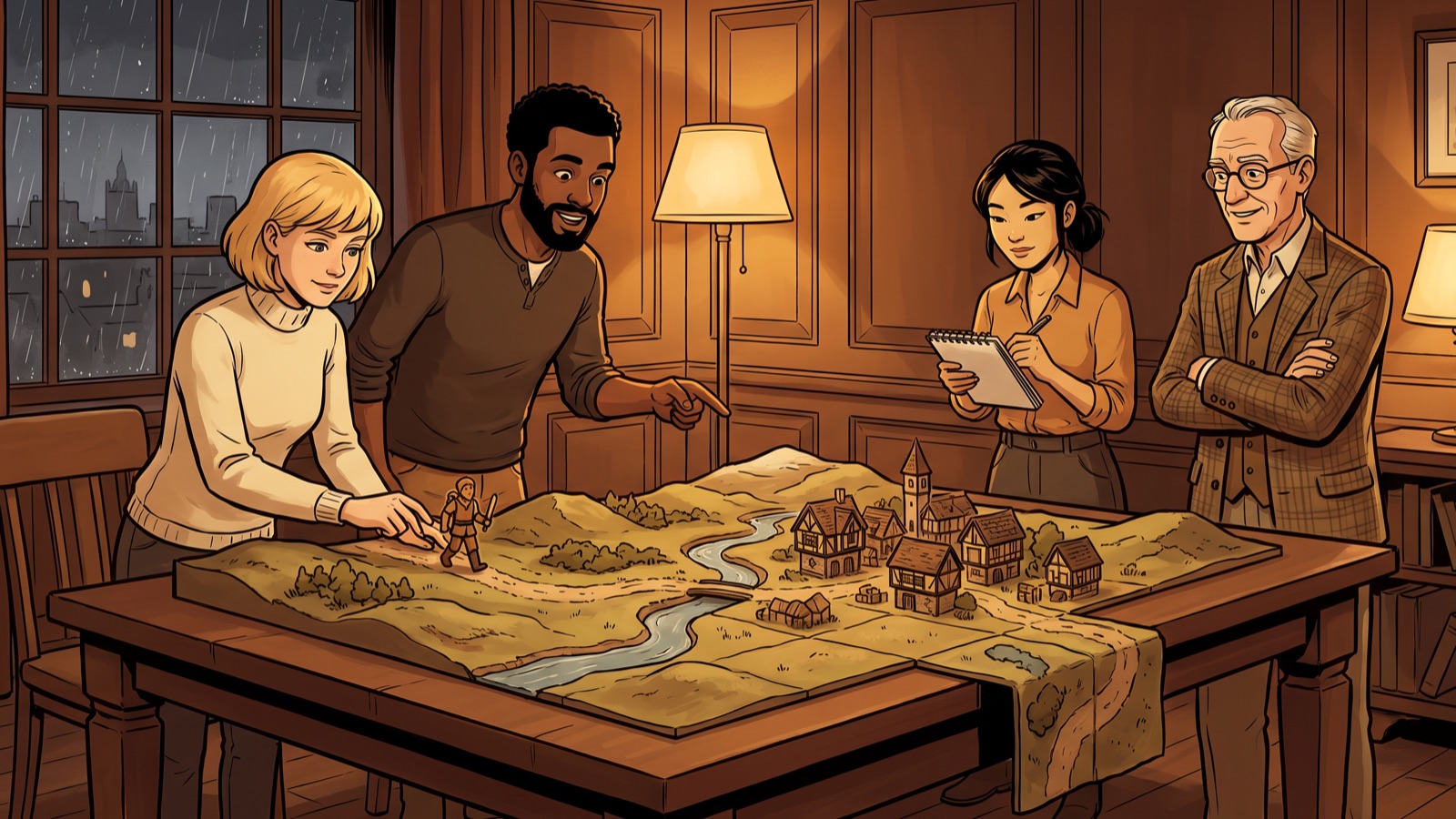
The third answer is the writer, and it is the one we build around. The model generates the performance. The player shapes it. But the world, the characters, their histories and secrets, the rules of the place and the shape of what can happen there are authored, and the generation is anchored to them.
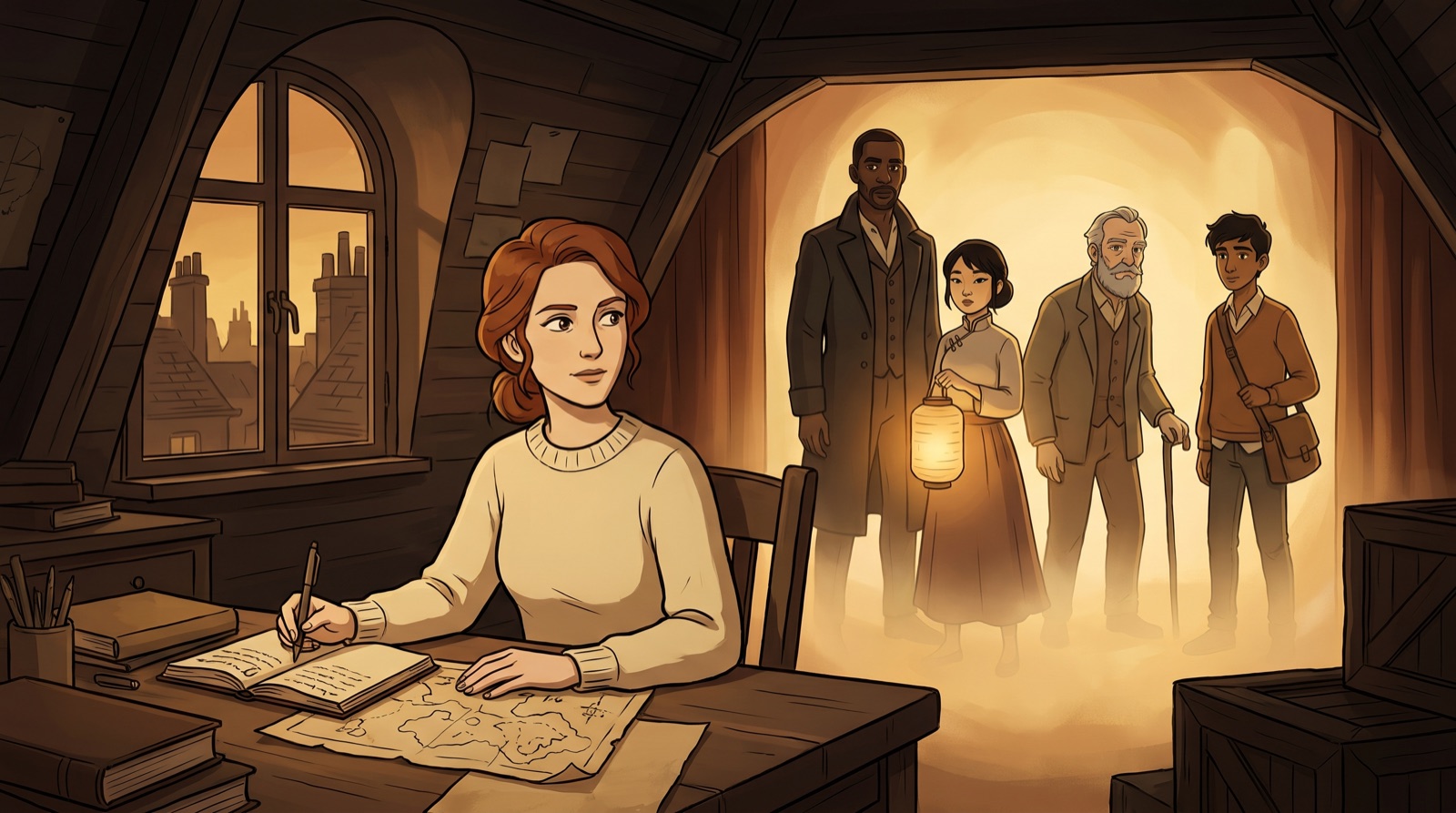
The writer is the author. The model is the cast and crew. The player is the audience who gets to walk on stage.
What a writer actually writes now
If the scene itself is generated, the writer’s job moves up a level. Instead of writing every line, they write the things every line must respect:
- Canon. The facts of the world that cannot bend: who is related to whom, what happened in the war, what the city looked like before the flood.
- Characters. Not dialogue, but people: their voice, wants, fears and limits. We described this approach in The end of the dialogue tree. A well-written profile is what lets a generated character say something new without saying something false.
- Tone. What kind of story this is. A model can write horror, farce and romance equally well, which is exactly why it needs to be told which one it is in.
- Beats. The moments that must happen, or must be earned, for the story to mean something. Players can reach them by different paths, but the destination is authored.
This is closer to how a showrunner works than a novelist. You build the bible, cast the roles, set the rules and then let the performance happen, stepping in where it drifts.
Why anchoring matters to players, not just writers
It is tempting to see authorship as a rights question, and it is one. But it is also a quality question, and players feel it immediately.
An unanchored story contradicts itself. A key character is alive on Monday and dead on Thursday. A secret is revealed because you asked twice. The stakes evaporate because nothing in the world is fixed enough to push against. Players stop believing, and once they stop believing they stop caring.
An anchored story has edges. The model can improvise freely inside them, which is where the delight comes from, but the edges themselves hold. The world remembers what is true. That is what makes a twist land, and what makes a choice feel like it cost something. We explored the same idea for whole worlds in Living worlds: why simulation is the next storytelling medium.
Credit where it is due
If the writer is the author, the products should say so. In our view, AI stories should name their creators as clearly as books and films do, and the systems behind them should treat the writer’s canon as something the model serves rather than something it overrides. Practically, that means three things:
- Canon outranks generation. When the model and the source material disagree, the source material wins, and the system should check rather than hope.
- Writers can see and steer. Authoring tools should show how the world is being performed, so writers can tighten a character or close a loophole without starting again.
- The creator’s name stays on the work. However many versions of a story players experience, it is still that writer’s story.
For our own work, that name is Senrama. We credit what we make to the studio, not to a single person or a single model, because AI is a new medium: a merger of man and machine. Human input shapes what the model produces, and what it produces feeds back into the next human choice. That loop creates new types of stories, infinite narratives that no single author could write alone, and experiences that grow as fast as the technology behind them. No one part of that partnership is the whole author, so the work carries the name of the studio and system that brings them together.
The new kind of storyteller
None of this makes writing smaller. If anything, the craft gets bigger. A writer for an AI story is building something that has to survive millions of unpredictable conversations and still feel like theirs. That takes deeper characters, firmer worlds and a clearer sense of what the story is about than a linear script ever needed.
The interesting future is not one where machines write stories for us. It is one where a single writer can create a world rich enough for every player to have their own night in it, and where every one of those nights still belongs to the person who imagined it. For more on how these stories are performed, see Every viewer a different cut.