3D generation
Meshy N1: native 3D texturing in 14 seconds
Meshy has released N1, a texturing model that generates colour directly on a 3D mesh instead of projecting 2D images onto it. The company reports cleaner textures and a median time of 14 seconds, against 68 to 237 seconds for the models it compared.
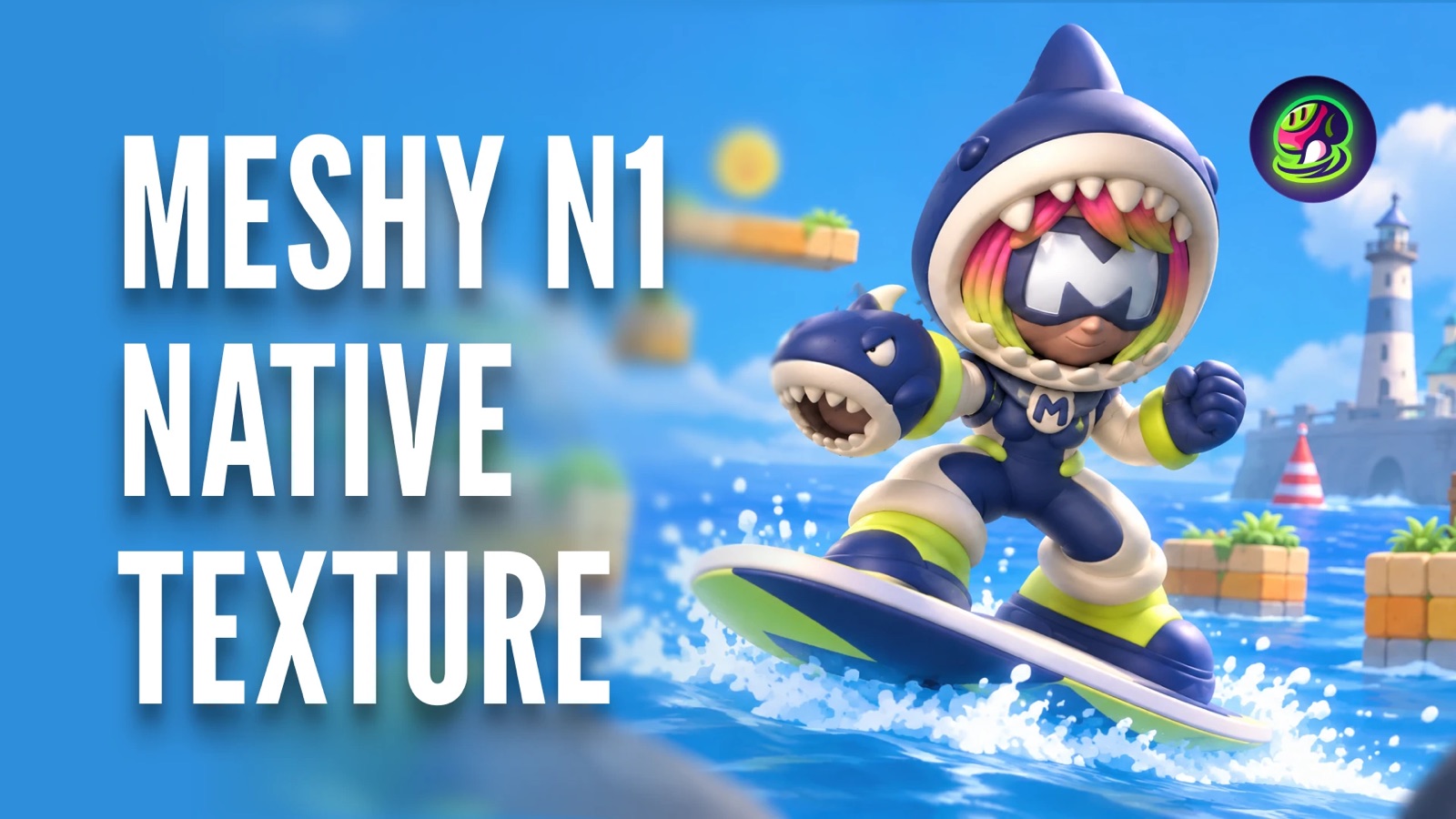
On 3 November, Meshy published Meshy N1, which it calls its first native texturing model. The rollout in the Meshy workspace began on 31 October and, the company says, will reach all users soon after.
What changed
Most AI texturing tools, including Meshy’s own Meshy 7, generate several 2D views of an object and project them onto the mesh. When two views disagree by a few pixels, the result shows doubled edges, smeared colour and broken shapes.
N1 skips the projection. It generates the colour directly in 3D, so there are no overlapping views to reconcile. Meshy argues this matters most for game assets, which are seen up close, from every angle and under changing light, and which usually pair a simple mesh with a detailed texture.
The numbers
All figures are Meshy’s own, on its own test set, using the same mesh from its Meshy T2.5 model for every texturer.
| Measure | Meshy N1 | Hi3D 3.0 | Tripo 3.5 | Rodin 2.5 |
|---|---|---|---|---|
| Texture cleanliness | 77% | 47% | 48% | 59% |
| Median texturing time | 14 s | 237 s | 69 s | 68 s |
| Texture alignment | 66% | 64% | 64% | 61% |
“Texture cleanliness” is a new metric from Meshy. It renders the base colour from 26 directions, finds colour edges and counts how many have a second, parallel edge nearby. Meshy says the benchmark will be published in its meshybench repository. Alignment, which Meshy says is measured against human-made reference models, is close across all four, so N1’s clear gains are in cleanliness and speed.
Access and limits
- N1 is available to all registered users. Multi-view texturing, where you upload several reference images, needs a paid subscription.
- It supports 2K texture resolution and base colour only. There are no other material maps yet.
- The test set is stylised characters, creatures, props and vehicles, so the results say little about realistic assets.
- No independent benchmark is available yet.
Our take
Texturing is a quiet bottleneck in generated worlds. A scene that needs hundreds of props cannot wait four minutes per asset, and visible seams are exactly what players notice. Meshy points out that agents are starting to assemble whole 3D scenes by generating and placing many assets in one pass, and a fast, clean texturer suits that workflow. For teams building with AI models as game generators, the practical question is whether 2K base colour is enough once lighting and materials are authored in the engine. For stylised games, it may well be.